Edward Chell
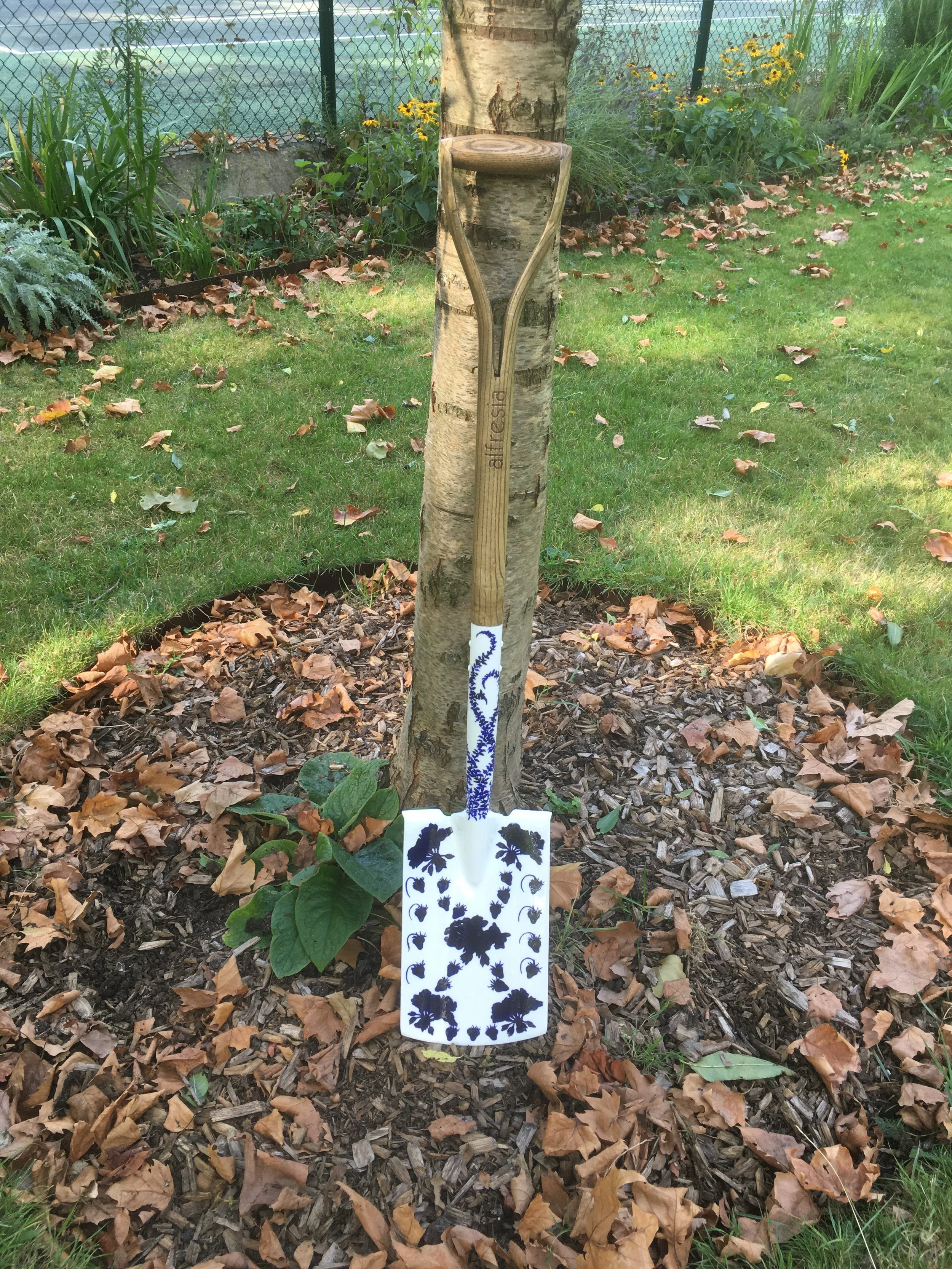
Spade pieces
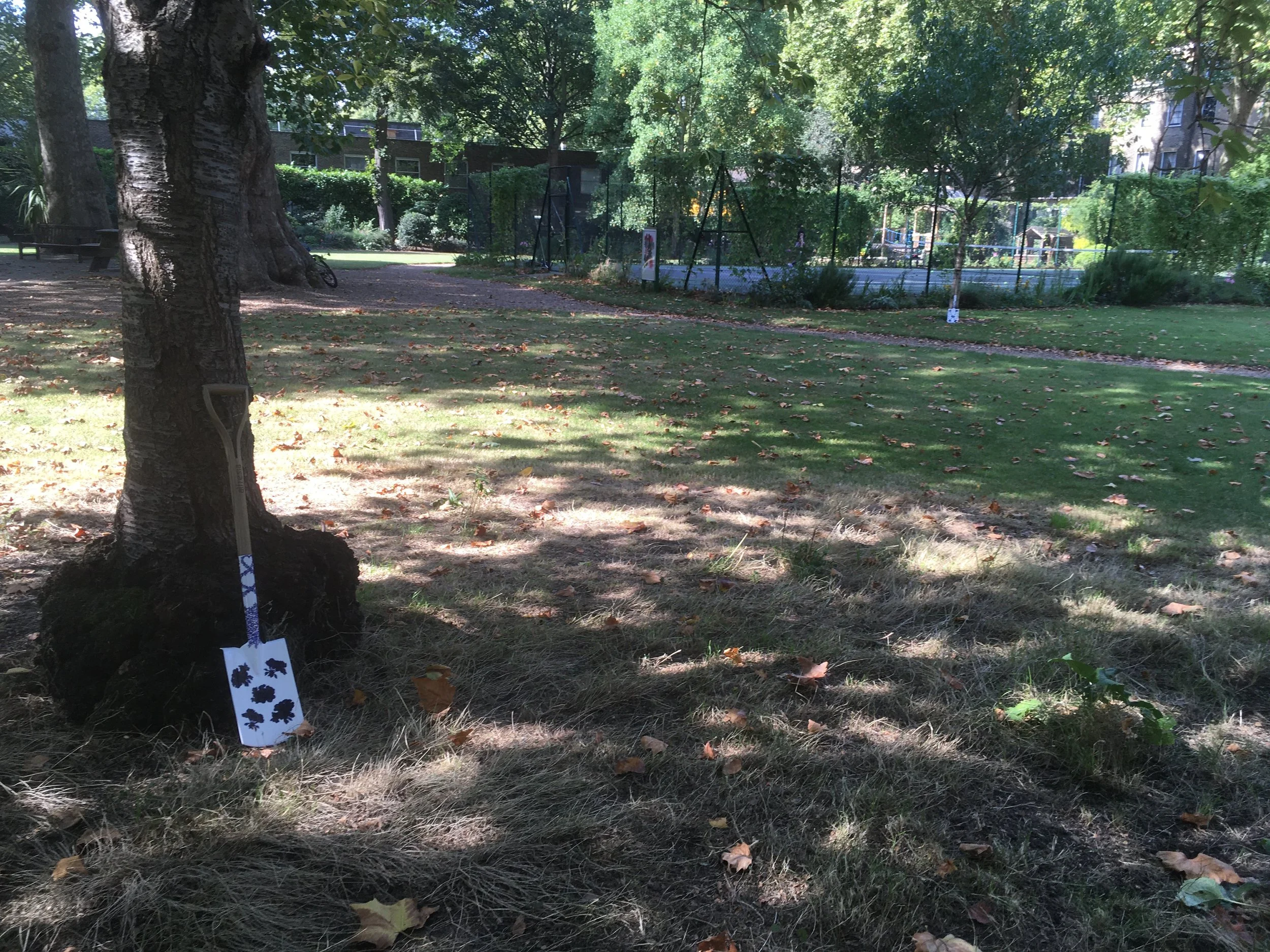
Spade pieces
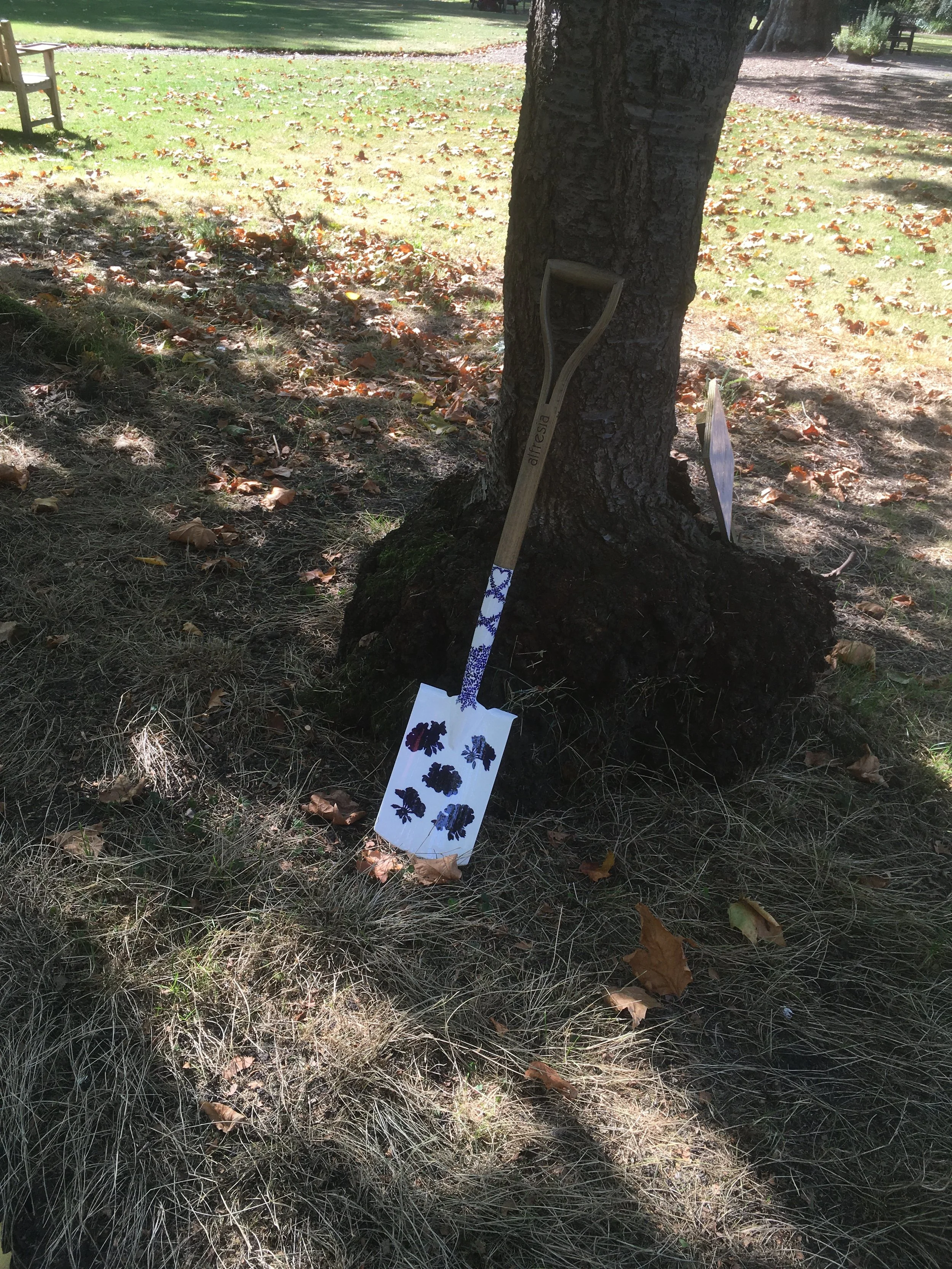
Spade pieces
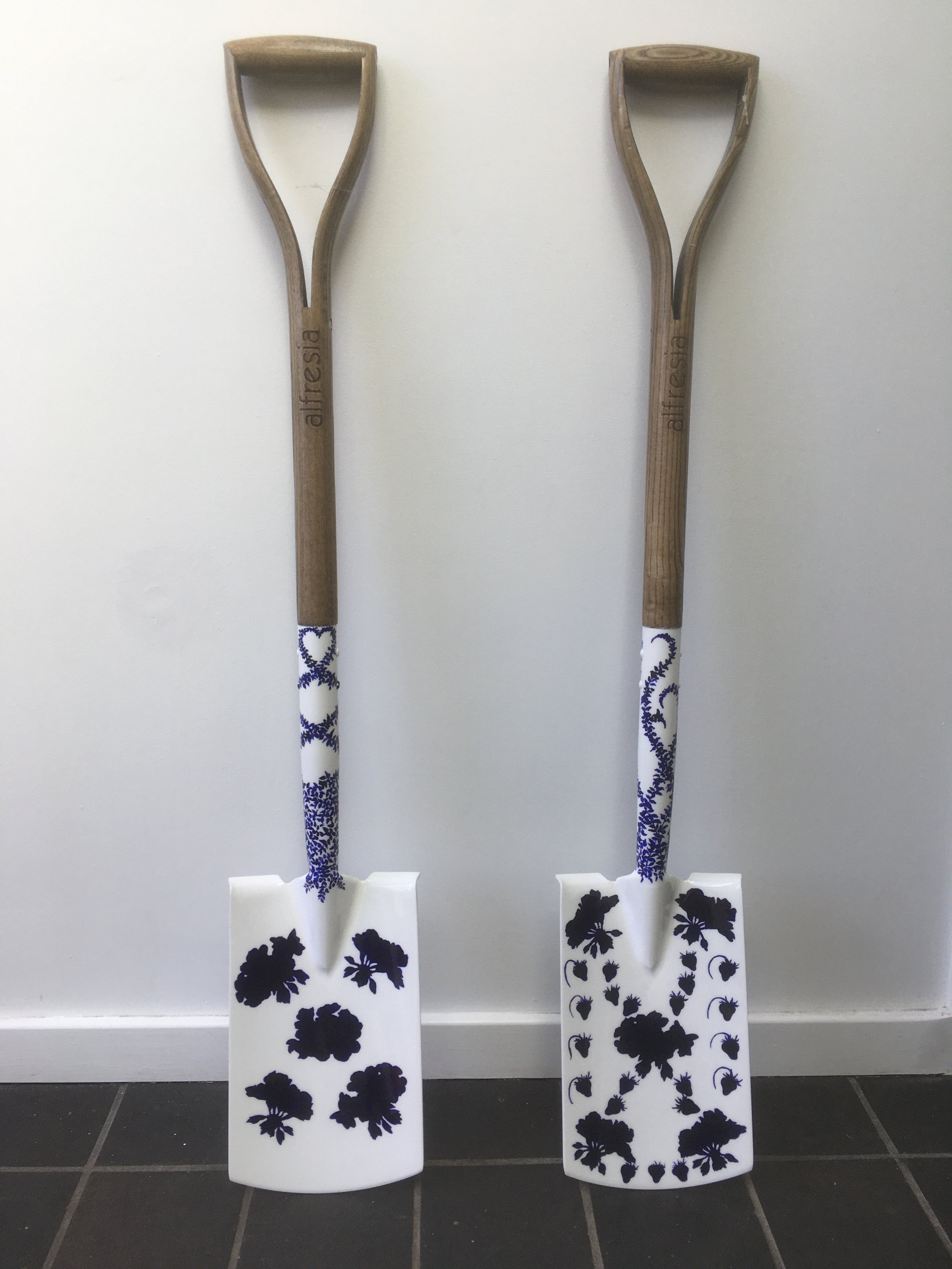
Spade pieces
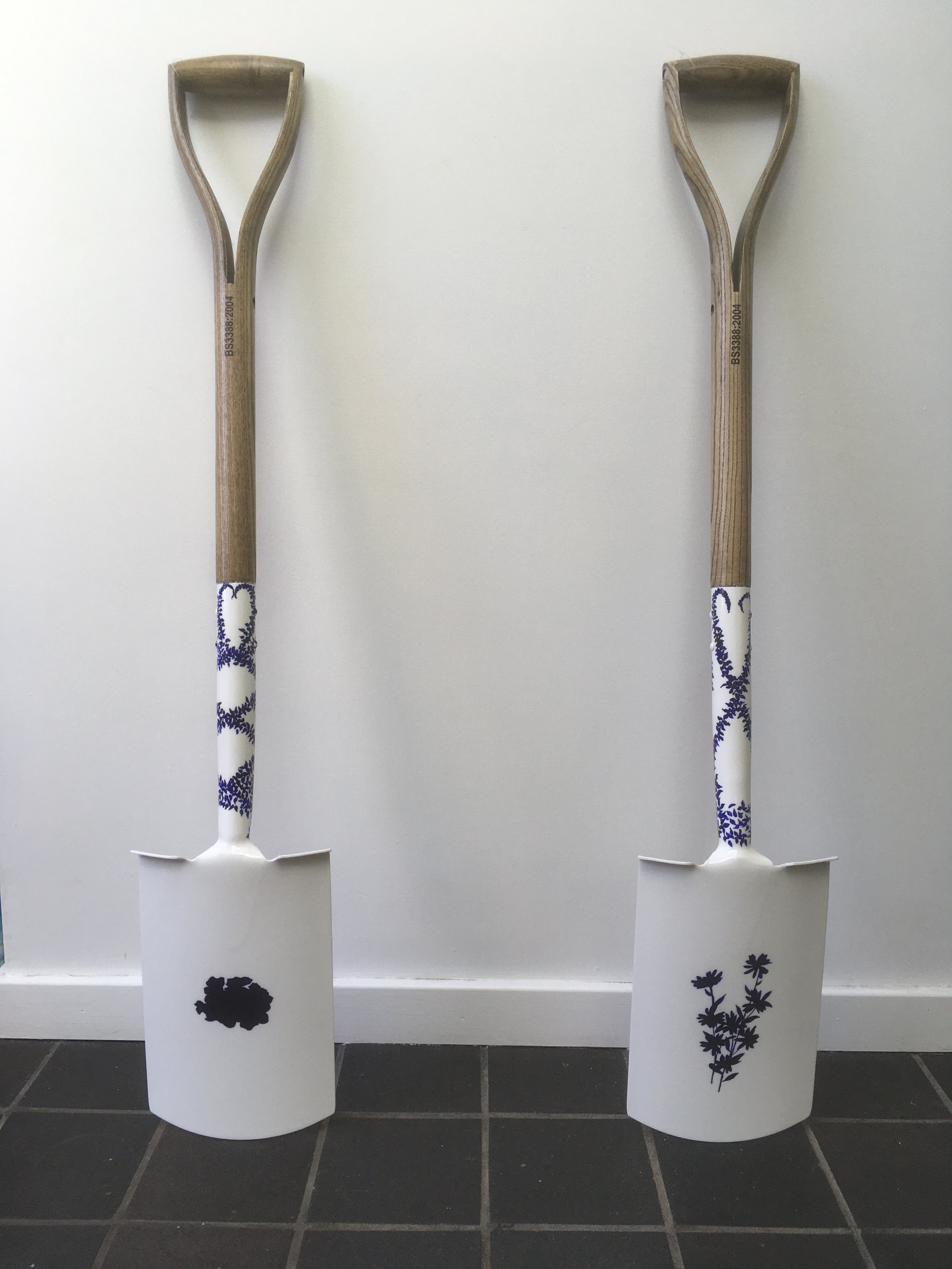
Spade pieces
Title: Spade pieces
Date: 2024
Medium: Enamel on spade
Artist: Edward Chell
Exhibition: En Route, 2024
From press release:
The spade is a workaday tool that has simultaneous associations with gardening but, and perhaps more importantly, as a symbol of labour and peasant sweat, having an almost violent relationship to the ground it transforms through manual activity, that leaves its associations precariously close to a kind of weaponry.
Planned and built in the late eighteenth century for a burgeoning wealthy middle class in a rapidly expanding London, Mecklenburgh Square and its planned ornamental central garden have associations, even now, with taste, finesse and unattainable wealth (the garden is private and was originally designed as such) reinforced by the canons of classical design. Though started in the eighteenth century, the east and north sides were not completed until the early nineteenth century. Joseph Kay (1775 – 1847) was the surveyor of the Foundling Hospital (later to become Great Ormond Street Hospital) who was surveyor not only for the garden site but also built these newer terraces. In another strange twist, he was also the surveyor for the area of Greenwich Docks and designed large areas of Greenwich including its market area. Greenwich is where tea clippers such as Cutty Sark from the East India Company dropped their cargoes of precious tea from China and along with this would have been other imported luxury goods associated with the tea trade such as ‘blue and white’ china. Global commodity and luxury goods are close siblings with tea trader Thomas Twining opening his first teashop in The Strand, London in 1717.
Combination of such contradictory associations in a rudimentary yet fundamental tool that essentially renders it ‘useless’, becomes freighted with contradictions around class, taste, travel and flipside of dirty hands, soil culture and the soft underbelly of lower class work and existence.
From artist:
Short statement for Spade pieces for Mecklenburgh Gardens
The spade is a workaday tool that has simultaneous associations with gardening but, and perhaps more importantly, as a symbol of labour and peasant sweat, having an almost violent relationship to the ground it transforms through manual activity, that leaves its associations precariously close to a kind of weaponry.
Planned an built in the late eighteenth century for a burgeoning wealthy middle class in a rapidly expanding London, Mecklenburgh Square and its planned ornamental central garden have associations, even now, with taste, finesse and unattainable wealth (the garden is private and was originally designed as such) reinforced by the canons of classical design. Though started in the eighteenth century, the east and north sides were not completed until the early nineteenth century. Joseph Kay (1775 – 1847) was the surveyor of the Foundling Hospital (later to become Great Ormond Street Hospital) who was surveyor not only for the garden site but also built these newer terraces. In another strange twist, he was also the surveyor for the area of Greenwich Docks and designed large areas of Greenwich including its market area. Greenwich is where tea clippers such as Cutty Sark from the East India Company dropped their cargoes of precious tea from China and along with this would have been other imported luxury good associated with the tea trade such as ‘blue and white’ china. Tea was becoming a cultural staple of all classes by the nineteenth century and phrases like ‘All the tea in China’ became commonplace. Global commodity and luxury goods are close siblings with tea trader Thomas Twining opening his first teashop in The Strand, London in 1717. 1)
The Spanish have an old fashion notion of the grocer, we might associate more with a delicatessen, that they called Tienda de Ultamarinos (that also has associations with the sea and colour of ultramarine blue) where imported exotic items and foodstuffs could be bought. Associations were carried by the likes of tea with ‘the exotic’ and far away places and cultures.
Combination of such contradictory associations in a rudimentary yet fundamental tool that essentially renders it ‘useless’, becomes freighted with contradictions around class, taste, travel and flipside of dirty hands, soil culture and the soft underbelly of lower class work and existence.
1) The merchant Thomas Twining opened the first dry tea shop in 1717, situating it next door to his popular coffeehouse on the Strand in London. Along with silk clothing and chocolate, the drink found its place in the period’s fashionable retail culture. Aspirational customers, normally middle-class or upwardly-mobile women consigned to the domestic sphere, bought dry leaves from shops like Twining’s of London so that they could brew them later at home, helping the domestic ritual of afternoon tea to grow in popularity. The Company’s trade in Chinese porcelain also expanded as consumers looked to perfect their prized tea sets. In turn, a vibrant pottery industry developed through domestic producers’ attempts to imitate the features of Chinese ceramics (including their famous blue-and-white colour scheme). As shipments increased and the price of tea gradually fell, Britain’s affinity with the drink grew stronger and its reach extended across social classes.
Website:
Instagram: